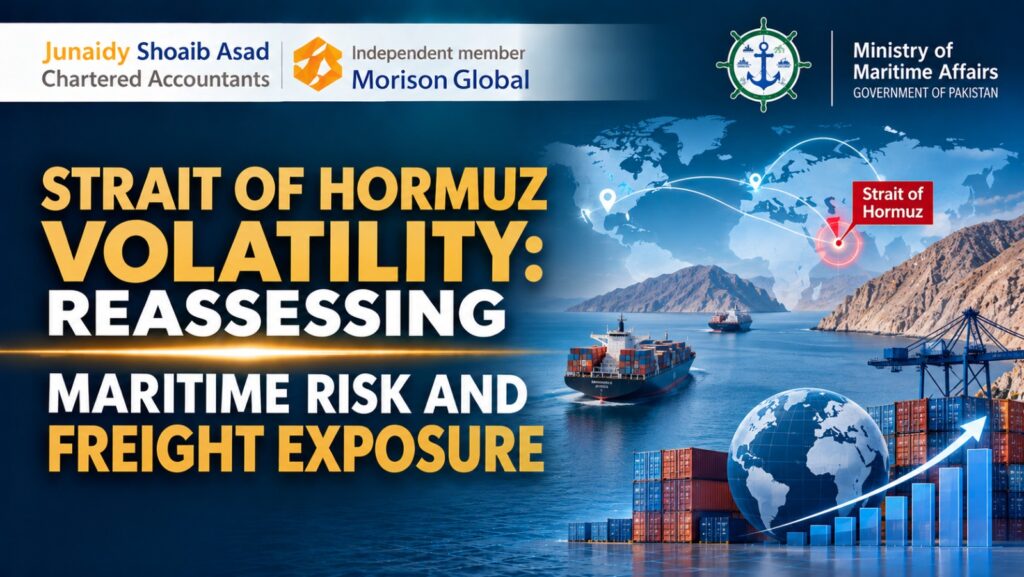
For commercial importers and export manufacturers across Pakistan, geopolitical turbulence in the Persian Gulf represents an immediate operational cost factor rather than an abstract headline. Following United States President Donald Trump’s confirmation of targeted military airstrikes against an anti-aircraft installation on Iran’s strategic Qeshm Island in the Strait of Hormuz, global petroleum benchmarks reacted swiftly, with Brent crude fluctuating near 105 dollars per barrel amid contested United States congressional midterm voting.
Because the Strait of Hormuz handles approximately twenty percent of global petroleum and liquefied natural gas shipments, any military escalation directly pressures the regional maritime supply chain. What this practically means for oil marketing companies, gas utilities, and freight forwarders operating through the Port of Karachi and Port Qasim is an imminent reassessment of maritime war-risk insurance classifications and carrier surcharges. Concurrently, export-oriented textile and engineering conglomerates must audit their international sales terms, ensuring CIF and FOB commercial contracts adequately apportion unforeseen transit surcharges and demurrage exposures. Navigating regional logistics disruption demands disciplined treasury hedging and robust contractual safeguards.