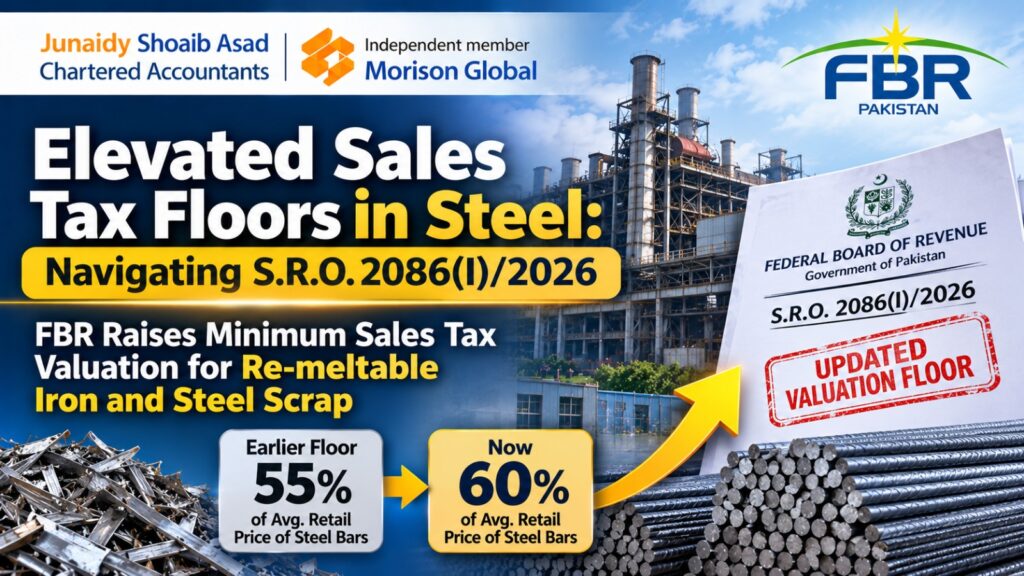
For steel melters, induction furnace operators, and construction materials manufacturers, raw material procurement is governed by an increasingly rigid statutory valuation regime. That fiscal floor has just been elevated by the executive decree. The Federal Board of Revenue has notified Statutory Regulatory Order 2086(I)/2026, officially raising the minimum sales tax valuation benchmark for supplies of re-meltable iron and steel scrap from fifty-five percent to sixty percent of the prevailing national average retail price of steel bars.
By tying the taxable value of scrap directly to retail bar prices, the statutory amendment permanently eliminates the commercial relevance of transactional discounts negotiated between shipbreakers at Gadani, scrap traders, and industrial buyers. Output sales tax, alongside adjustable withholding taxes, must now be computed on at least sixty percent of the published steel bar benchmark, regardless of actual invoiced consideration. What this practically means for industrial manufacturing units is an immediate, mandatory increase in working capital cash outflows at the raw material purchase stage. Corporate finance teams must immediately reconfigure enterprise resource planning billing modules and recalibrate input-output tax reconciliation models to ensure vendor scrap invoices strictly meet the newly notified sixty percent statutory floor, preventing the summary disallowance of input tax adjustments by tax auditors.